Critical Minerals Symposium Reflections
December 19, 2025
By Ge Tang
It has been just over a month since the Critical Minerals Symposium, but my head is still buzzing from the rich, layered discussions generated by our fantastic speakers and participants. They are from diverse disciplinary backgrounds: curatorship, environmental humanities, geology, art and literary studies, media studies, architecture, labour history, psychology, sustainability consulting, and more. Given the breadth of their expertise, it was unsurprising, yet still exciting, to see such a wide range of themes and discussions emerge over the course of the day. These included critical minerals’ historical connections to technological imagination and their role in the current digital and AI transition (Dr Tom Nurmi); and a ‘critical’ history of critical minerals in relation to colonial extractivism, war geology, and today’s distrust of mining and mining companies (Panel I’s speakers: Dr Nicholas McGee, Dr Gustave Lester, Dr Geertje Schuitema). Dr Dipali Mathur’s paper discussed the fictions of the ‘green’ energy transition and the grim prospect of Ireland’s Sustainable Development Goals, while Dr Aileen Doran’s insight as a sustainability and risk consultant inspired us to imagine and to work for a more just transition.
Panel three (Speakers: Alexia Bozas, Ritam Dutta, Dr Gary Boyd)—and in fact papers from other panels too—demonstrated the unique affordances of literature, film, and the arts in imagining and critiquing critical minerals. Our feature paper by Camille Mary Sharp discussed the significance of confronting museums as extractive institutions in our efforts to create a just and sustainable mineral future. Our conversations also returned repeatedly to questions of how we teach, research, and communicate our work ethically and critically in the face of the extractive realities we live in. These questions were deftly handled by our speakers in our last panel themed ‘Critical Methodologies and Research Ethics’ (Speakers: Dr Helene Birkeli, Dr Kelly Richards, Camille Britton, Dr Padraig Murphy)
I was impressed by how deeply our speakers and participants engaged with each other despite their different disciplinary backgrounds and approaches to critical minerals. It was evident that we were all animated by shared concerns about critical minerals and the narratives shaping the green energy transition.
See below for some of the reflections from our engaged participants, each offers a window into the vibrant conversations we shared.
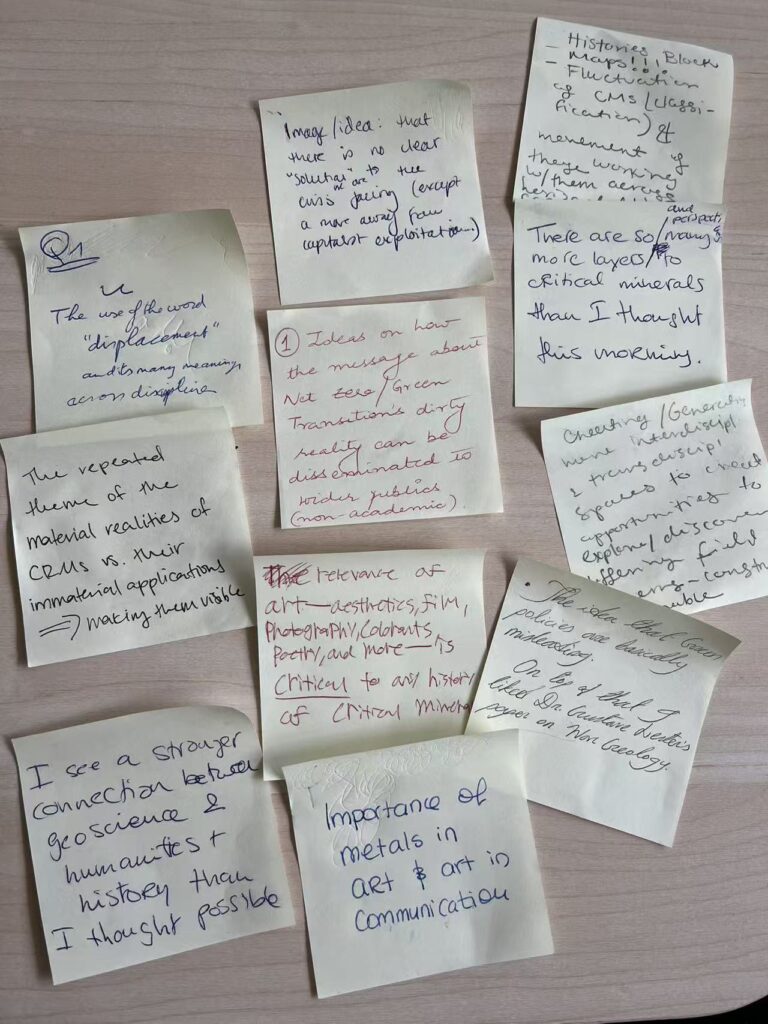
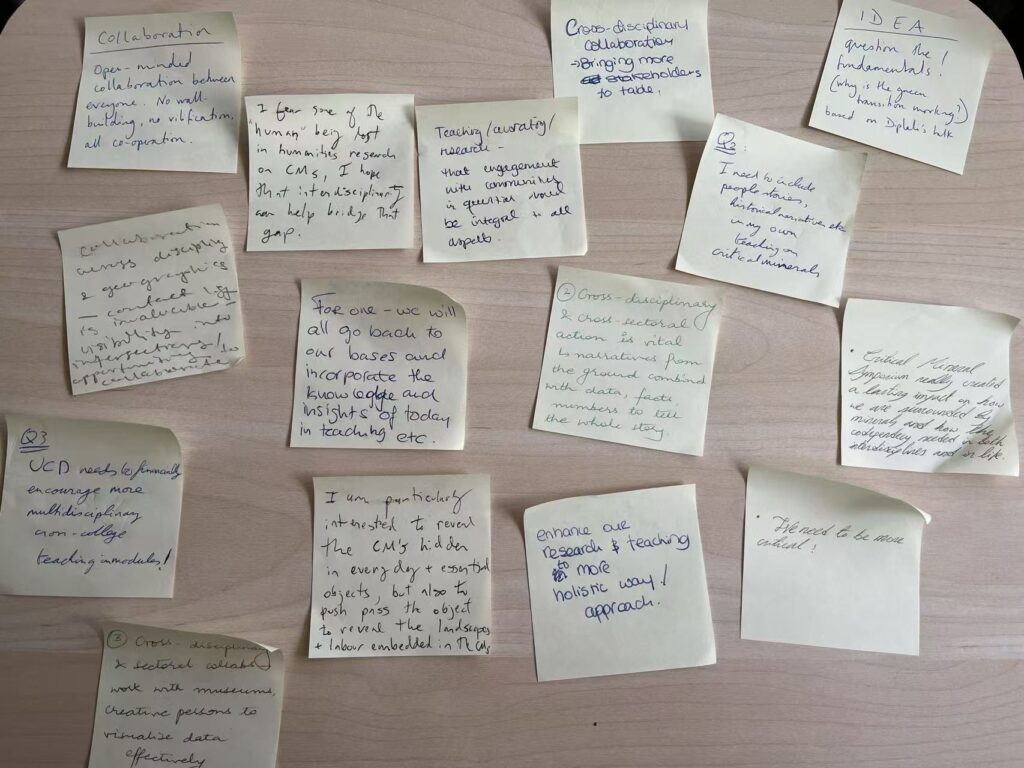
A few threads that resonated strongly:
- Arts and humanities are indispensable for any study of critical minerals. One participant even confessed that the symposium fundamentally changed his earlier misunderstandings about the role of arts and humanities in this field.
- ‘Holistic’ teaching and ethical research matter. We must keep interrogating the stories told about minerals, extractivism, and sustainability in our classrooms and research envelopments, and keep making space for interdisciplinary, ethical, and reflective approaches.
- Interdisciplinary conversation and collaboration are essential for challenging the illusions and ‘tidy narratives’ surrounding sustainability and green transition technologies.
The Critical Minerals Symposium has already sparked budding ideas for collaborations in various forms, and, on top of these, the development of a Critical Minerals Research Caucus. If you would like to join, please email ge.tang@ucd.ie, or getangvic19@gmial.com, with your name, email address, affiliation, and research interests, to be added to the Google Group.